

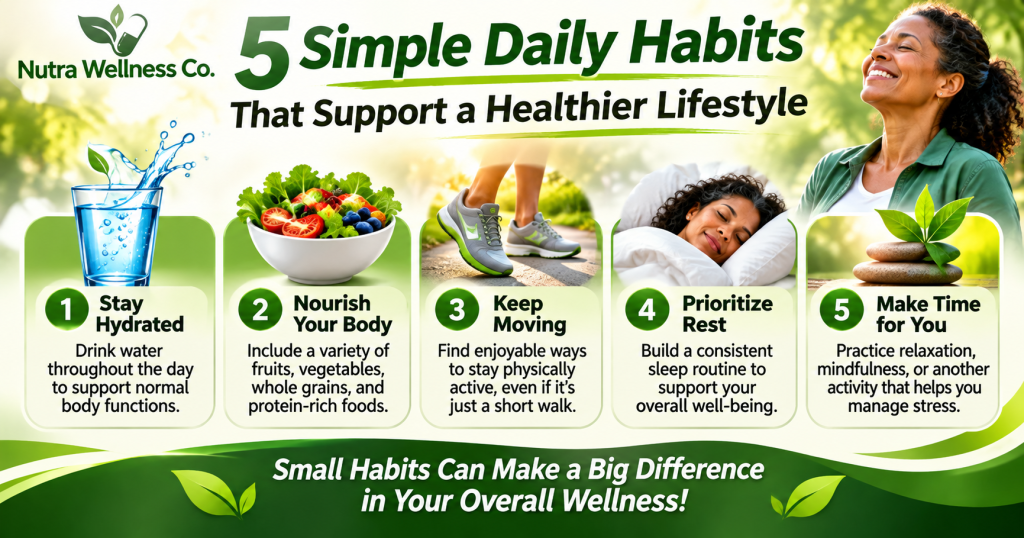
Some days, “live healthier” can sound like a project that requires a new grocery budget, an hour-long workout, and a color-coded planner. In real life, it is usually more useful to make one supportive choice at a time.
Healthy daily habits are small actions you repeat often enough that they begin to fit into your actual life. They are not a promise of perfect health, and they do not replace medical care. But a few steady basics can support energy, mood, physical function, and long-term well-being.
The short version: move in ways you can sustain, make balanced food the easy option more often, give sleep a reliable place in your schedule, create a brief pause for stress, and stay connected to people who matter. Pick one habit to start; you do not need to overhaul all five at once.
🌿 Wellness Spotlight by Nutra Wellness Co.
Nutra Wellness Co. shares practical wellness education,
nutrition information, and healthy living inspiration
as part of the Making a Prosperous Lifestyle community.
1. Add movement to your normal day
Movement does not need to mean training for a race or joining a gym. A walk after lunch, a few trips up the stairs, gardening, dancing while dinner cooks, or a short strength routine all count. The practical goal is to spend less of the day sitting still and find activity you can do consistently.
For adults, federal guidance recommends at least 150 minutes of moderate-intensity activity a week, plus muscle-strengthening activities on two or more days. That is a useful long-term target, not a requirement to “earn” the benefits of moving. CDC notes that even some moderate-to-vigorous activity and less sitting can provide health benefits.
- Make it smaller: Take a 10-minute walk after one meal.
- Make it visible: Put walking shoes by the door or schedule a calendar reminder.
- Make it useful: Walk during a phone call, park a little farther away, or do calf raises while waiting for the kettle.
If you have an injury, a chronic condition, dizziness, chest pain, or have been advised to limit activity, ask a qualified health professional what type and amount of movement is appropriate for you. CDC: Benefits of Physical Activity
2. Make one balanced meal the default
A healthier eating pattern is not built from a single “perfect” food. It is built from what is available and repeatable most days. An easy starting point is to include a fruit or vegetable, a protein food, and a high-fiber carbohydrate such as beans, oats, brown rice, or whole-grain bread when it works for your preferences and needs.
For example, breakfast could be oatmeal with fruit and yogurt; lunch could be a bean-and-vegetable wrap; dinner could be roasted vegetables, salmon or tofu, and rice. These are examples, not rules. Cultural foods, food access, allergies, medical conditions, and budget all matter.
Try the “add, don’t ban” approach
Rather than beginning with a list of foods to avoid, add one supportive item:
- Add frozen vegetables to soup, pasta, or a stir-fry.
- Add fruit to breakfast or keep it where you can see it.
- Add beans, eggs, fish, tofu, chicken, yogurt, or another protein you enjoy.
- Keep a simple backup meal on hand for hectic nights, such as eggs on whole-grain toast with fruit.
NIDDK describes healthy meals as including vegetables and fruits along with portions of protein and whole grains. The current U.S. Dietary Guidelines also emphasize nutrient-dense whole foods, including vegetables, fruits, protein foods, dairy or alternatives, healthy fats, and whole grains. NIDDK: Keep Active & Eat Healthy · Dietary Guidelines for Americans
3. Protect a consistent sleep window
Sleep is easy to treat as the first thing to sacrifice when life gets busy. Yet a regular sleep routine supports how you feel and function during the day. Most adults ages 18 to 60 need at least seven hours of sleep per night, although individual needs can vary.
A consistent schedule is often more realistic than trying to force an ideal bedtime overnight. Choose a wake-up time that works most days, then move your bedtime gradually if you need more sleep.
- Set a 30-minute wind-down alarm, not only a morning alarm.
- Keep the bedroom quiet, relaxing, and comfortably cool when possible.
- Put screens aside before bed if they keep you alert or tempt you into “just one more” scroll.
- If caffeine affects your sleep, experiment with stopping earlier in the day.
Persistent insomnia, loud snoring, gasping during sleep, or daytime sleepiness that affects driving or daily life deserves a conversation with a health professional. CDC: About Sleep
4. Build in a short stress reset
Stress is not a personal failure, and no breathing exercise can remove a difficult job, caregiving demands, grief, or financial pressure. Still, a brief daily reset can create a little room between a stressful moment and your next response.
Choose a practice that feels tolerable rather than impressive: five minutes of slow breathing, a quick stretch, a short walk outside, writing down what is on your mind, prayer, music, or sitting quietly with a cup of tea. Mindfulness simply means deliberately paying attention to the present moment; it can be practiced while walking, eating, or waiting in line.
Try linking the reset to something that already happens: after you close your laptop, before you start the car, or while the coffee brews. If stress or anxiety is overwhelming, interferes with daily life, or leads to thoughts of self-harm, seek professional or urgent support rather than relying on self-care alone. NIH: Mindfulness and Meditation · NIMH: Coping With Stress and Anxiety
5. Make one genuine connection
Health is not only about what happens on your plate or in your workout tracker. Supportive relationships matter, too. A daily connection can be brief: send a thoughtful text, call a relative during a walk, chat with a neighbor, eat with a household member without devices, or ask a friend a question and listen to the answer.
Quality matters more than quantity. The goal is not to become more social than you want to be; it is to make room for a relationship that feels safe, mutual, or meaningful. CDC notes that social connection supports health and well-being and can help people manage stress, sleep better, and maintain healthy behaviors.
If reaching out feels hard, make the first step extremely small: react to a friend’s message, invite someone for a 10-minute call, or attend a community activity once. CDC: Social Connection
A simple one-week way to begin
Choose one action from the list below for the next seven days. Keep the bar low enough that you can do it even on a tiring day.
- Movement: Walk for 10 minutes after lunch.
- Meals: Add one fruit or vegetable to one meal each day.
- Sleep: Start winding down 20 minutes before your usual bedtime.
- Stress: Take five slow breaths before opening social media or email.
- Connection: Send one sincere message to someone you care about.
At the end of the week, ask: What made this easier? What got in the way? What is the smallest version I can continue? That reflection is more useful than judging yourself for missed days.
Progress beats a perfect routine
A healthier lifestyle is not a streak you either maintain or ruin. Work schedules, illness, travel, caregiving, and low-energy days will change what is possible. Return to the smallest workable version of the habit and let that count.
Over time, healthy daily habits are less about motivation and more about reducing friction: keep nourishing foods within reach, make movement convenient, protect your bedtime, save a calming practice you actually like, and make it easy to contact people who support you.
Frequently asked questions
What is the easiest healthy habit to start?
Start with the habit that requires the fewest extra steps in your current routine. For many people, that is a short walk, adding produce to one meal, or setting a consistent wind-down reminder.
Do I need to do all five habits every day?
No. These habits are supportive options, not a pass-or-fail checklist. Consistency over weeks and months matters more than completing every action on every day.
Can short bouts of activity still help?
Yes. Short sessions can be a practical way to accumulate activity, especially when longer workouts are not realistic. Build gradually and choose activities that fit your abilities.
What if my health condition changes what I can eat or how I can exercise?
Follow guidance from your clinician or registered dietitian. Some conditions, medications, and injuries require individualized recommendations, so general lifestyle advice should be adapted rather than followed rigidly.