

Build a More Prosperous Lifestyle
Discover practical ways to earn more, save money, use AI, grow a business, and improve everyday life—through independent guides, useful resources, and carefully explained reviews.

Founder & Publisher
Making A Prosperous Lifestyle
A better life starts with a useful next step.
I’m Barry S. McCoy, Sr., founder and publisher of Making A Prosperous Lifestyle.
This site brings together the parts of life we often try to improve separately: earning, spending, learning, working, and making time to enjoy what matters.
Start with the practical lesson below. Choose one area that needs attention, try one manageable action, and use the guides when you want to go deeper.
A prosperous lifestyle is a life you can sustain—and enjoy.
A prosperous lifestyle means building more stability, choice, and satisfaction in everyday life. Money matters, but so do your time, useful skills, relationships, and the freedom to decide what deserves your attention.
Making a Prosperous Lifestyle (MPL) starts with seeing how those parts affect each other. Earning more can help, but taking on work that consumes every evening may leave you with less of the life you wanted. Buying another tool only helps if it solves a problem you actually have.
Our approach connects practical learning with a small action you can take, a result you can review, and a next step that fits your circumstances.
What would “better” look like this month?
A bill you can plan for? A skill you can use? An evening that belongs to you?
Write one specific answer. That is a more useful starting point than trying to improve everything at once.
Four parts. One life.
Each area can support the others. Start with the one that needs attention, then review what changes.
See your starting point.
Track income, spending and commitments.
Create useful options.
Practise one skill that solves a real problem.
Make room to act.
Simplify a routine; use technology deliberately.
Protect what matters.
Plan time for relationships, rest and enjoyment.
Choose one action → put it into practice → review and adjust.
The MPL framework is a planning aid, not a promise of financial or personal results.
More stability. More choice. More room to live.
You do not need to work on all four today. Find the area creating the most friction, make one useful change, and use what you learn to choose the next one.
Understand your money before making bigger plans.
Start with what comes in, what must go out, and what changes from month to month. A simple spending record can show which choices are available and which commitments need attention. The goal is clarity, not a perfect spreadsheet.
Try this: Review a recent week of spending. Mark essentials, flexible purchases, and costs you want to investigate. Choose one question to answer.
Develop a skill that solves a real problem.
Useful skills create options: doing your current work better, helping a customer, starting a small service, or becoming more independent. Choose a specific problem first; then learn the skill needed to address it. Buying a course is not the same as practising.
Try this: List three things people already ask you to help with. Pick one and create a small example that shows what you can do.
Use your time and technology with intention.
Look for repeated tasks, unnecessary steps, and commitments that no longer fit. AI can help draft a checklist or organise rough notes, but its output needs your review. Keep private account details out of prompts and verify factual answers before using them.
Try this: Choose one routine task. Write its steps, try one simpler method, and compare the time and quality before keeping it.
Leave room for the life you are building.
Progress should support your everyday life. Rest, relationships, interests, and enjoyable experiences belong in the plan. A local outing or protected afternoon can be worthwhile without becoming another expensive project.
Try this: Schedule one realistic activity you value. Decide its time and spending limits before you commit.
A week is a useful first look. For a fuller picture, CFPB suggests tracking spending for at least two weeks or a month. Read its spending-tracker guidance.
One small change can support another.
How does personal growth help you build a prosperous lifestyle?
Personal growth supports a prosperous lifestyle by connecting practical skills, thoughtful money decisions, and better use of your time. The aim is to make everyday life more manageable while creating room for the things that matter to you.
An everyday example: make busy evenings easier
Imagine finishing work tired, ordering takeout because nothing is planned, and putting off a skill you want to learn.
Start with one manageable change: plan two simple dinners before your next grocery trip. Check what you already have, write a short shopping list, and prepare enough for leftovers. Compare the cost and effort with your usual routine to see whether the change helps.
If it makes your evening easier, use a little of that time to practise something useful—such as creating a household spreadsheet, improving your writing, or learning a tool for work. Choose one small task you can finish rather than starting several courses.
At the end of the week, ask: Did I spend less? Were evenings easier? What can I do now that I could not do before? Keep what helped and adjust what did not.
That is how the steps connect: understand your starting point, choose a practical change, build a useful skill, and review the result. Progress can mean greater confidence, fewer rushed decisions, or more time with your family—not only a higher income.

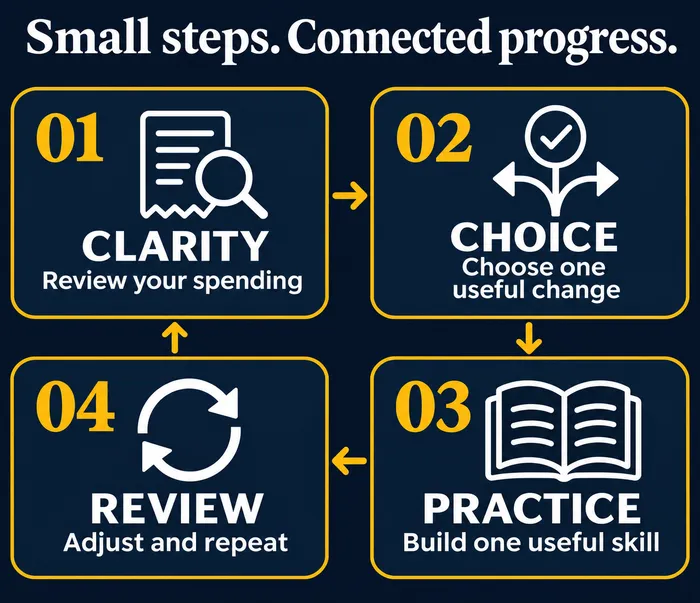
Review your spending, choose one manageable change, practice a useful skill, and check what worked before taking your next step.

Understand where your money goes
Start with your income, regular bills, and everyday spending. Choose one expense or habit to review before deciding what to change.
Further reading: CFPB money-management toolkit (opens in a new tab)
Make one useful change this week.
Use a notebook or the Personal Growth workbook. Write your goal at the top, then record a few lines each day. If a day gets interrupted, continue when you can; the sequence is a starting structure, not a deadline.
Define one useful outcome.
Finish this sentence: “This week would feel better if I…” Choose something you can influence, such as understanding a bill or completing one practice task.
Look at your starting point.
Write down the relevant facts: time available, current commitments, spending involved, or skills you already have. Separate what you know from what you need to find out.
Choose the smallest workable action.
Break the goal into one step you can finish. “Draft one service description” is easier to act on than “start a business.”
Use one resource, then practise.
Read the guide that answers your immediate question. Apply one idea before collecting more information or paying for another tool.
Remove one obstacle.
Prepare what you need, simplify the task, or ask a specific question. If the action was too large, reduce it rather than abandoning the whole goal.
Protect time for what matters.
Make room for a realistic break, conversation, or enjoyable activity. Notice whether your plan supports your life or makes the week harder.
Review and choose your next step.
Record what you did, what changed, and what was difficult. Keep one helpful action, adjust one obstacle, and schedule the next small step.
Your weekly record: My goal · My next action · What happened · What I will adjust.
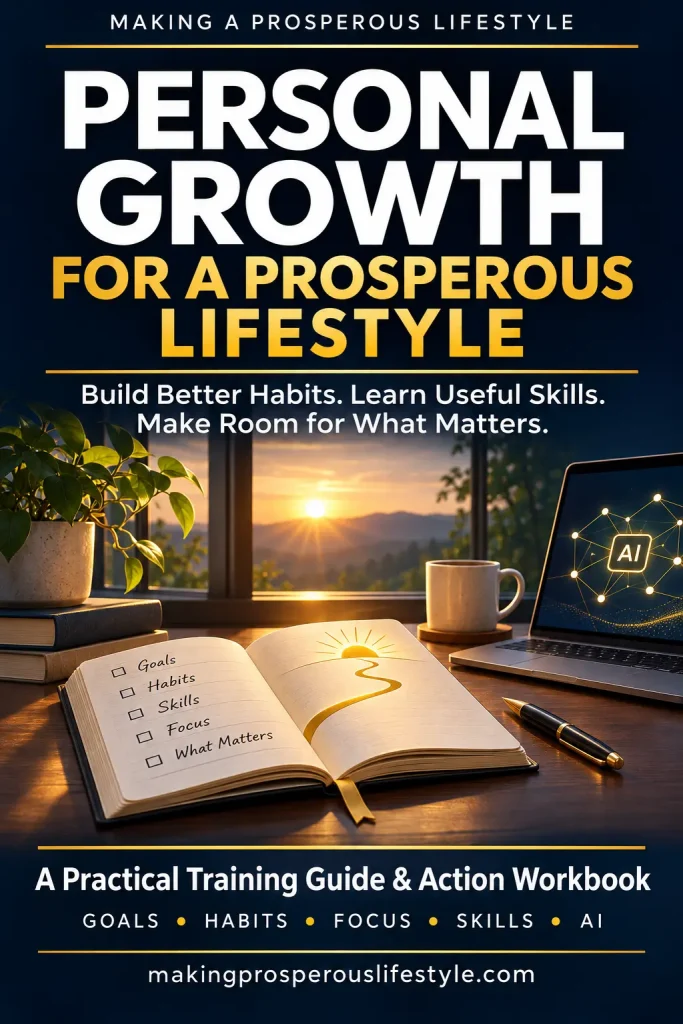
Turn your first step into a personal plan.
The Personal Growth training and workbook gives you a place to choose a meaningful goal, think through your habits and skills, and put a seven-day plan into writing.
Use it alongside this page. Complete the parts that match your current goal, record what you try, and return to the plan when your priorities change.
- Clarify what matters to you.
- Choose a manageable action.
- Connect learning with everyday decisions.
- Review your progress and adjust.
The download is requested on the Personal Growth page. You can also read the online training there without signing up.
Choose the path that fits your next question.
These are different parts of the same goal. Start with the one that addresses your present need; there is no requirement to follow every path.
Earn More
Explore income ideas, assess what they require, and choose a realistic first test.
Save More
Understand everyday spending and investigate decisions that fit your priorities.
AI & Technology
Learn where digital tools can help—and what to check before relying on them.
Business
Clarify an offer, plan your work, and use the Business Training & Workbook.
Personal Growth
Connect goals, habits, skills, and practical learning in one personal plan.
Travel & Lifestyle
Plan a trip or local experience with clearer choices about time and cost.
Looking for a particular format? Browse all guides and workbooks or read the latest articles.
Questions about building a prosperous lifestyle.
Do I need more income before I can begin?
You can begin by understanding your current situation and choosing an action within your control. More income may be an important goal, but planning, practising a skill, or simplifying a routine can be useful starting steps.
Where should I start if everything feels important?
Choose the issue affecting your daily life most directly. Name one outcome for the coming week and use the seven-day practice above. If the action becomes overwhelming, make it smaller.
How does AI fit into a prosperous lifestyle?
AI can assist with tasks such as outlining a plan, drafting questions, or organising notes. Treat its output as a draft, check facts and calculations, and keep sensitive personal information out of prompts. Use it when it helps a defined task rather than adding another distraction.
Are the training guides free?
The featured Personal Growth workbook is offered free through its signup section. The Resources page identifies the available guides and their next steps. Check any separate product or service page for its price and terms.
Sources & Further Reading
For further reading on the spending, planning, and AI topics mentioned above:
Start with the life you want to make easier.
Choose one goal, try one manageable action, and use what you learn. You can return for the next resource when you need it.