

EARN MORE / PRACTICAL GUIDE
Turn Skills Into Income
Learn how to identify a useful skill, turn it into a clear service or product, test whether people want it, and take your first steps without relying on unrealistic income promises.
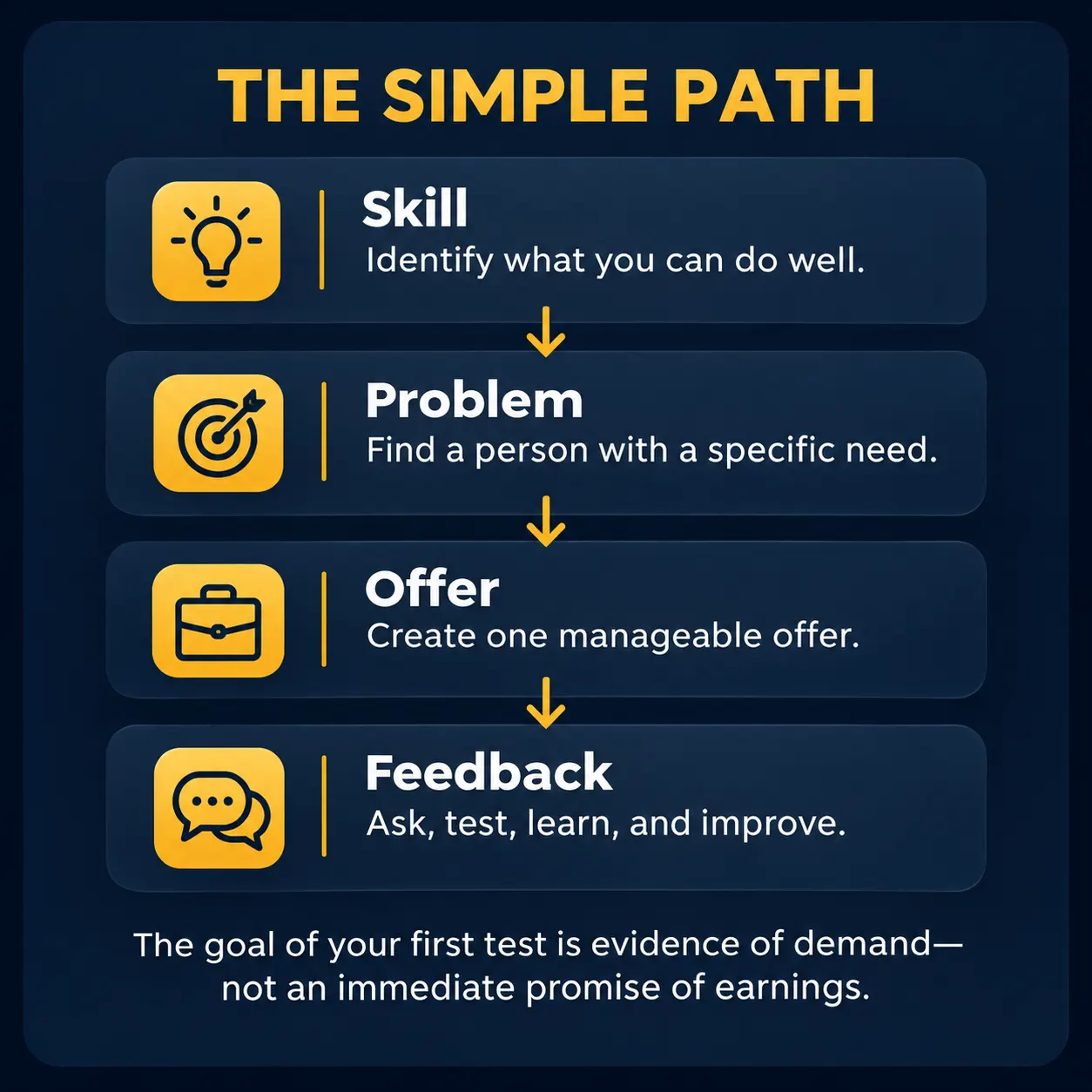
Start with one problem you can solve. You do not need a perfect website, a large audience, or a long list of qualifications to begin exploring an idea.
START HERE
What Does It Mean to Turn Skills Into Income?
Turning skills into income means offering a useful result that someone is willing to pay for. You might provide a service, teach a process, create a reusable digital product, or help a business complete a specific task. Your first job is to connect an ability you have with a problem that matters to another person.
Example: Someone who organizes spreadsheets could offer a basic expense-tracking setup for a small business. They would first ask business owners what they need, show a sample, and agree on a clear deliverable before accepting paid work.
STEP 1 · SKILL INVENTORY
Identify Skills Other People May Value
Write down tasks you can perform reliably, problems people already ask you to solve, and results you have produced. Experience from work, volunteering, hobbies, and everyday life can all count.
Look at what you already do
List 10 tasks you can explain or complete with confidence: writing, editing, organizing, bookkeeping support, design, tutoring, research, repairs, technology setup, or customer communication.
Look for evidence
Which tasks have earned compliments, repeat requests, measurable improvements, or referrals? Save two or three examples you can show without sharing private information.
Match skill to customer
For each promising skill, finish: “I help [specific person] solve [specific problem] by providing [specific result].” Keep it narrow and understandable.
Choose one starting skill
Rate your top three ideas for ability, enjoyment, time required, cost to deliver, and likely customer need. Pick one to investigate rather than launching several at once.
STEP 2 · PICK YOUR FORMAT
Choose a Service or Product That Fits
A service usually relies on your time and direct delivery. A product can be delivered repeatedly, but often takes more work before customers discover it. Begin with the format you can test most easily.
Freelance or local service
Examples: proofreading a short document, social content formatting, organizing records, basic website updates, or setting up an appointment workflow. Define scope and turnaround time.
Consulting, coaching, or teaching
Teach a skill you genuinely know or guide clients through a process. Make boundaries clear; regulated professional advice may require credentials or a license.
Digital product
Examples: a checklist, template, planner, workbook, spreadsheet, or mini-training. Verify the problem before spending weeks creating a finished product.
Practical decision rule
If someone needs hands-on help now, test a service first. If the same question comes up repeatedly, consider a reusable product after validating interest.
STEP 3 · TEST DEMAND
Validate the Problem Before You Build
Do not assume demand because an idea sounds exciting. Look for real questions, existing alternatives, and signs that people will commit time or money to solving the problem.
Interview five potential customers
Ask what they have tried, what frustrates them, how they solve it today, and what a useful outcome would look like. Avoid asking only “Would you buy this?”
Study alternatives
Find existing providers, offers, and customer reviews. Notice what buyers praise, complain about, or say is missing. Competition can suggest demand, not guarantee it.
Show a small sample
Present a one-page service description, mockup, template preview, or small demonstration. Ask for concrete feedback and permission to follow up.
Request a meaningful next step
A paid pilot, deposit under clear terms, scheduled consultation, or confirmed preorder is stronger evidence than likes. Be transparent about delivery and refunds.
STEP 4 · DEFINE A FIRST OFFER
Make Your Offer Specific and Manageable
People are more likely to understand an offer when the customer, deliverable, timeline, and boundaries are clear. Avoid promising outcomes outside your control.
Use a simple offer statement
“I help [type of customer] with [problem] by delivering [specific result] in [timeframe].” Example: “I organize a small business’s existing spreadsheet into a simple monthly expense tracker.”
Set a realistic scope
Describe exactly what is included, what the customer supplies, how many revisions are allowed, and what is excluded. Put expectations in writing.
Price with costs in mind
Estimate work hours, tools, transaction fees, revisions, and taxes. Compare credible alternatives. An introductory pilot price should still be deliberate—not a race to the bottom.
Prepare a trustworthy sample
Create a sample, a short before-and-after example using fictional data, or a clear process outline. Do not invent testimonials or customer outcomes.
YOUR FIRST WEEK
A Simple 7-Day Action Plan
Aim for learning and a usable first offer, not guaranteed sales. Adjust the pace to fit your schedule.
Day 1 — Inventory
List 10 skills and select three candidates.
Day 2 — Narrow
Choose one customer and one problem.
Day 3 — Listen
Talk to two potential customers or study relevant customer questions.
Day 4 — Compare
Review three competing alternatives and note unmet needs.
Day 5 — Draft
Write a clear offer and create one simple sample.
Day 6 — Test
Show the offer to three relevant people and ask for specific feedback.
Day 7 — Decide
Record responses; revise, test again, or stop if the evidence is weak.
LEARN FROM THE RESULTS
What to Track After Your First Test
Keep a short record: who you contacted, the problem they described, whether they understood the offer, what they objected to, the time and cost required, and whether anyone committed to a next step. If the response is weak, change one variable at a time—customer, problem, format, message, or price.
Important: There is no guaranteed earnings timeline. Demand, competition, capabilities, pricing, marketing, and consistent delivery all affect results. Review local rules, tax obligations, platform requirements, and any licensing requirements before providing paid services.
MORE FREE MPL RESOURCES
Keep Learning With Related Guides
Use these existing MPL pages to expand the skill, planning, and business fundamentals behind your first offer.
Business Action Training
Clarify your offer, understand customers, set prices, and plan your business operations.
Personal Growth Workbook
Create a small practice routine, stay focused, and build skills through manageable steps.
Affiliate Marketing Guide
Learn another income model focused on recommending appropriate products and services.
MPL Resource Library
Browse more learning materials and tools for creating a practical path forward.
FREQUENT QUESTIONS
Questions About Earning From Your Skills
Do I need special qualifications to get started?
Not for every type of work. Some services are unregulated, while others require licenses, certifications, insurance, or legal compliance. Check the requirements for the specific service and location before offering it.
Should I start with a service or digital product?
A simple service can be easier to test directly with potential customers. A digital product may be appropriate when you find a repeated problem and can make something useful that addresses it.
How do I know whether people will pay?
Conversations and online research provide clues, but real commitments—such as paid pilots or preorders with clear terms—are stronger signs. No test can guarantee future demand.
What if nobody responds to my first offer?
Review whether you reached the right people, described a meaningful problem, and presented a clear deliverable. Improve one part of the offer and test again, or choose a different problem.
SUPPORTING RESOURCE
Get the Skills-to-Income Action Workbook
Use seven practical worksheets to identify your strongest skills, research customer needs, shape a service or product offer, plan a realistic first test, and track your seven-day action plan. Enter your name and email to receive the 8-page PDF, including its cover.
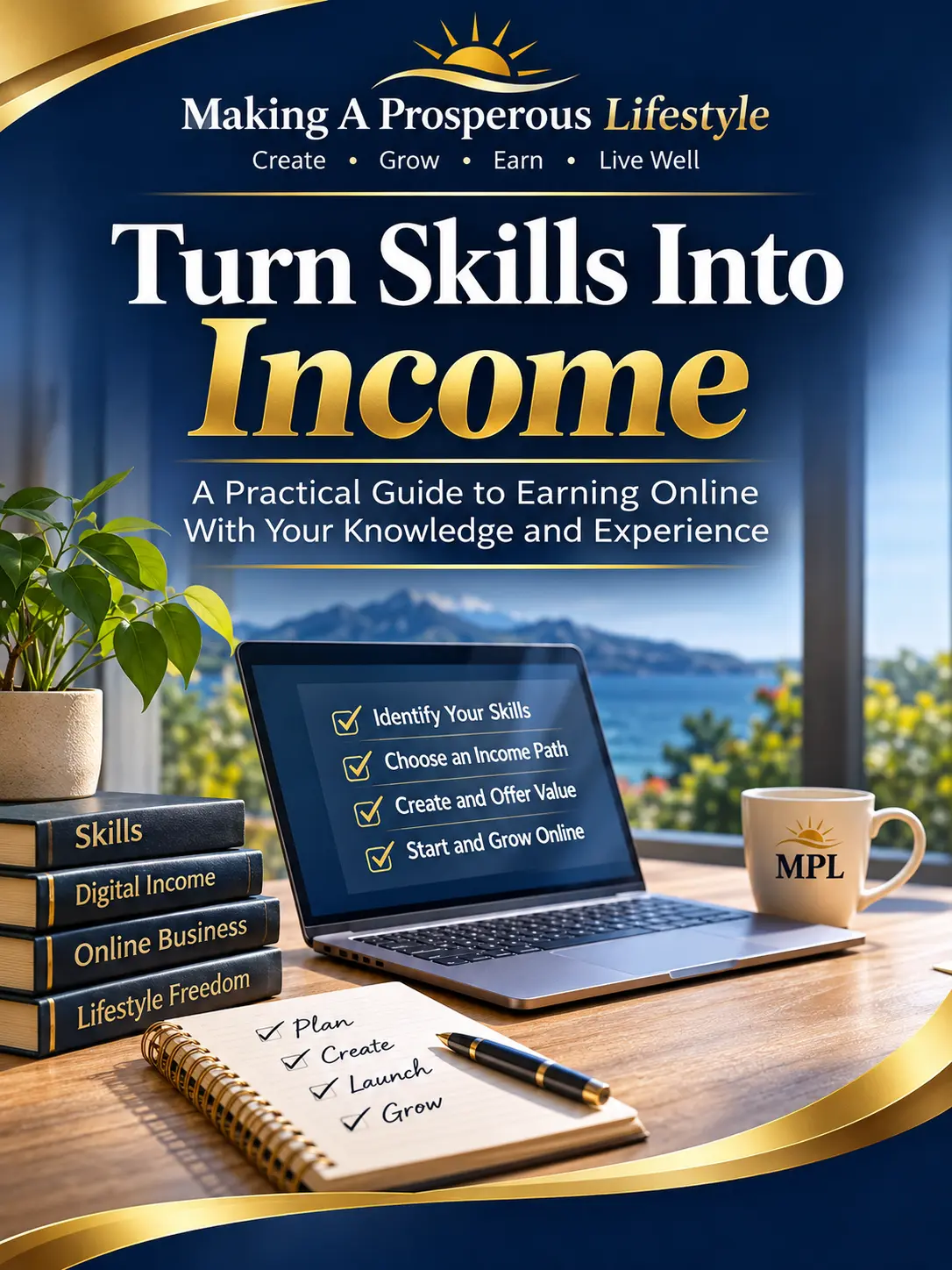
Get Your Free Skills-to-Income Workbook
Complete the form below and we’ll email your Skills-to-Income Action Workbook. You can continue reading the entire online guide without signing up.
Your information is used to deliver the requested workbook. Any optional marketing emails should require separate consent.
READY FOR YOUR NEXT STEP?
Choose One Skill. Solve One Real Problem.
Pick a small next action you can complete this week. Useful work starts with understanding people and delivering on a clear promise—not chasing overnight success.