

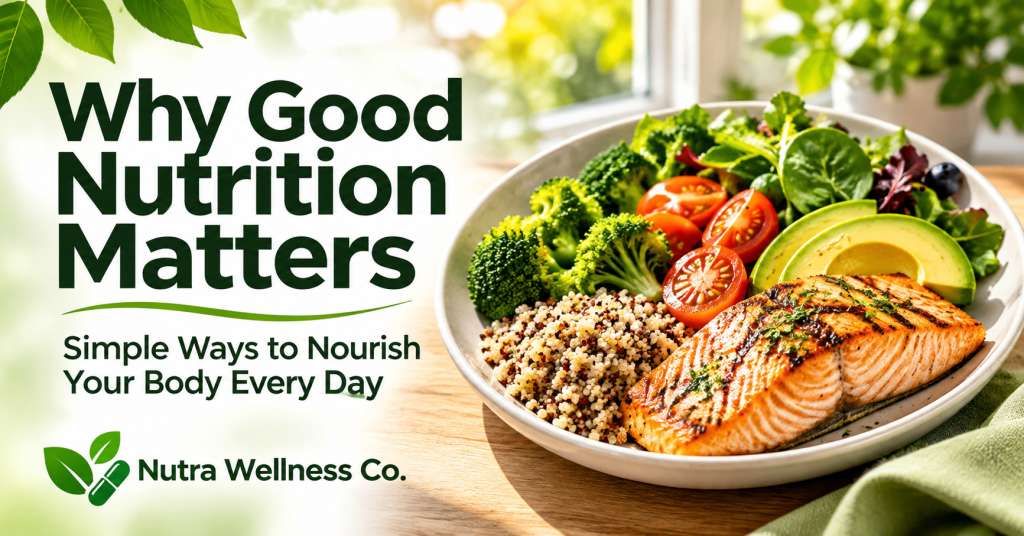
Updated October 26, 2026: The current U.S. Dietary Guidelines for Americans, 2025–2030 were published in 2026, along with a new visual food-guide icon. For everyday households, the useful message is still practical rather than rigid: make nourishing foods and drinks the regular foundation of your routine, while leaving room for preference, culture, budget, and convenience.
Healthy eating habits matter because the foods and drinks you choose repeatedly help provide the energy, protein, fiber, vitamins, minerals, and fluids your body needs to function. You do not need a flawless diet or a long list of forbidden foods. A more helpful goal is to make vegetables and fruits, protein foods, fiber-rich grains and beans, and mostly unsweetened drinks easier to choose most of the time.
🌿 Wellness Spotlight by Nutra Wellness Co.
This article is part of the Nutra Wellness Co. wellness education series, presented through Making a Prosperous
Lifestyle. We share practical nutrition information, healthy living inspiration, and wellness product discoveries to help readers make informed choices.
Why good nutrition matters
Nutrition is not just about a number on a scale. A consistent eating pattern supports the body systems you rely on every day. The CDC notes that healthy eating can support muscles, bones, immune function, digestion, healthy pregnancies, and weight management, and may lower the risk of heart disease, type 2 diabetes, and some cancers. CDC: Benefits of Healthy Eating for Adults
That does not mean one “healthy” meal changes everything. Health outcomes are influenced by many factors, including sleep, movement, stress, medical care, income, genetics, and access to food. Nutrition is one meaningful part of the picture—and it works best as a pattern built over weeks and months.
Food provides more than calories
Calories are energy, but foods also bring different combinations of protein, fats, carbohydrates, fiber, vitamins, minerals, and naturally occurring plant compounds. For example, an apple and a sweetened apple-flavored snack may contain a similar number of calories in some portions, yet the apple also contributes water and fiber. The point is not to label foods as morally “good” or “bad”; it is to notice what a food regularly adds to your day.
What healthy eating habits look like in real life
Healthy eating is a pattern, not a single menu. The CDC describes it as emphasizing nutrient-dense foods such as vegetables, fruits, protein foods, whole grains, healthy fats, and dairy foods without added sugars, while limiting highly processed foods, added sugars, added sodium, and refined carbohydrates. CDC: Healthy Eating Tips
Nutrient-dense means a food offers useful nutrients relative to its calories. It does not have to be expensive, fresh, trendy, or complicated. Frozen vegetables, canned beans, oats, peanut butter, eggs, plain yogurt, canned fish, tofu, and store-brand whole-grain bread can all be practical choices.
Seven simple ways to nourish your body every day
1. Add one nourishing food before taking foods away
Restriction can make healthy changes feel punishing. Start by adding something: berries to breakfast, a handful of spinach to eggs, beans to soup, or a side of frozen vegetables with dinner. This approach builds abundance into meals without requiring an all-or-nothing mindset.
2. Include a protein food at meals
Protein helps build and repair body tissues and can make meals more satisfying. Rotate choices that work for you, such as eggs, yogurt, fish, poultry, lean meat, beans, lentils, tofu, tempeh, nuts, seeds, or soy foods. Variety can make meals more interesting and can help you work within your budget.
3. Make fiber a regular part of your routine
Fiber is found in vegetables, fruits, beans, lentils, whole grains, nuts, and seeds. It supports digestive health, can help you feel full longer, and is associated with better blood-sugar and cholesterol control. CDC: Healthy Eating Tips If your current diet is low in fiber, increase it gradually and drink enough fluids to give your digestive system time to adjust.
4. Choose water or unsweetened drinks more often
Water helps the body regulate temperature, protect tissues and joints, and remove waste. Replacing sugary drinks with water can also reduce calorie intake without making a meal less filling. CDC: Water and Healthier Drinks Keep a reusable bottle nearby, serve water with meals, or add lemon, cucumber, or berries if you enjoy more flavor.
5. Build meals from a few dependable components
Instead of chasing perfect recipes, use a flexible formula:
- Produce: vegetables, fruit, or both
- Protein: beans, eggs, fish, poultry, tofu, yogurt, or another favorite
- Fiber-rich carbohydrate: oats, brown rice, corn, potatoes, whole-grain bread, or lentils
- Flavor and satisfying fat: olive oil, avocado, nuts, seeds, herbs, spices, salsa, or a sauce you enjoy
Examples include a bean-and-vegetable burrito bowl, oatmeal with yogurt and fruit, a tuna or chickpea sandwich with crunchy vegetables, or a stir-fry with tofu, frozen vegetables, and rice. Portions will differ from person to person; the goal is a satisfying meal, not a prescribed plate size.
6. Read packaged-food labels with a purpose
Packaged foods can absolutely fit into a nourishing diet. The Nutrition Facts label can help you compare similar products. Begin with the serving size, then check the amount of sodium, added sugars, saturated fat, and fiber for the amount you realistically plan to eat. The serving size is not a rule about how much you should eat; it is the amount used for the label’s nutrition information. CDC: Nutrition Facts Label and Your Health
For example, when choosing between two soups, breads, cereals, or sauces, compare sodium and added sugars per serving. Choosing the lower-sodium or lower-added-sugar option when it still tastes good to you is a practical habit—not a test of perfection.
7. Make the easier choice the nourishing choice
Your environment matters more than willpower alone. Wash fruit when you bring it home. Keep canned beans, frozen vegetables, eggs, oats, and simple proteins on hand. Portion snacks into a bowl rather than eating from the package. Plan one or two easy meals for busy nights before the week begins.
A realistic one-day example
This is an example, not a required plan:
- Breakfast: Oatmeal topped with plain yogurt, fruit, and nuts or seeds.
- Lunch: Leftover chicken, tofu, or beans with rice or potatoes and a generous serving of vegetables.
- Snack: Fruit with peanut butter, plain yogurt, or whole-grain crackers and hummus.
- Dinner: Pasta with tomato sauce, lentils or turkey, sautéed vegetables, and a side salad or fruit.
- Drinks: Water, sparkling water, unsweetened tea, or another beverage that fits your needs and preferences.
Notice that familiar foods still belong. Healthy eating habits do not require eliminating bread, pasta, rice, desserts, or restaurant meals. They ask you to consider frequency, portion, and what you can add to make the overall pattern more nourishing.
Healthy eating on a budget
A nourishing routine does not depend on specialty products. Try low-cost staples such as dried or canned beans, lentils, oats, peanut butter, eggs, canned salmon or tuna, potatoes, bananas, frozen produce, and store-brand whole grains. Choose canned vegetables with no salt added or lower sodium when available, and rinse canned beans to help reduce sodium.
Buying foods you will actually use is more valuable than buying aspirational ingredients that spoil in the refrigerator. Pick meals based on your schedule, cooking skills, culture, and household preferences. Repetition is fine: a few reliable breakfasts and weeknight dinners can reduce stress and food waste.
Food first, supplements second
Supplements can be useful in specific situations, but they are not a replacement for a varied eating pattern. The National Institutes of Health notes that supplements may help some people meet nutrient needs, yet they cannot provide the full variety of foods that supports a healthy eating routine. NIH Office of Dietary Supplements
Talk with a qualified health professional before starting supplements if you are pregnant or breastfeeding, have kidney or digestive disease, take medication, follow a highly restricted diet, or have been told you have a nutrient deficiency. Individual needs can be different from general wellness advice.
Your simple healthy-eating checklist
- Include a fruit or vegetable at most meals.
- Choose a protein food that you enjoy and can prepare easily.
- Work in fiber-rich foods such as beans, oats, fruit, vegetables, whole grains, nuts, or seeds.
- Keep water easy to reach.
- Compare labels when choosing similar packaged foods.
- Plan for convenience with frozen, canned, and leftover options.
- Focus on what you can repeat—not what you can do perfectly for one day.
The most sustainable healthy eating habits are usually the least dramatic ones: a better breakfast you can make in five minutes, vegetables that are already in the freezer, water at your desk, or a dependable bean-and-grain meal on a busy evening. Start with one change that feels realistic, repeat it until it becomes routine, and build from there.