

Smart Savings & Wealth Building:
Your Complete Roadmap to Financial Prosperity
Discover proven, expert-backed strategies to save more money, eliminate financial stress,and build real, lasting wealth — no matter where you’re starting from today.
Did you know...
73%
The number of Americans that are living paycheck to paycheck
$1M+
The average millionaire net worth- disciplined saving
30 years
The average time to build significant wealth alll the time
What You’ll Learn On This Page
Click to learn more and get started
- 1. The Fundamentals of Smart Saving
- 2. Top 10 Proven Savings Strategies
- 3. How to Build an Emergency Fund
- 4. Debt Elimination That Accelerates Wealth
- 5. Investing Basics for Wealth Building
- 6. Retirement Planning Essentials
- 7. Real Estate as a Wealth Vehicle
- 8. Building Multiple Income Streams
- 9. The Wealth Mindset Difference
- 10. Wealth Building Calculator
- 11. Ten Costly Mistakes to Avoid
- 12. Frequently Asked Questions
Quick Answer: What Is the Best Way to Build Savings and Wealth?
Building savings and wealth requires a systematic 5-step approach:
- Establish an Emergency Fund — Save 3–6 months of living expenses in a high-yield savings account before investing
- Eliminate High-Interest Debt — Pay off credit cards and loans above 7% interest rate aggressively
- Maximize Tax-Advantaged Accounts — Contribute fully to 401(k), IRA, and HSA accounts
- Invest Consistently in Diversified Assets — Use index funds, real estate, and dividend stocks for long-term growth
- Increase Income Streams — Develop multiple revenue sources to accelerate wealth accumulation
The average person who follows these steps consistently can accumulate $1 million in net worth within 25–30 years starting from zero, according to financial planning research.
Written & Researched by the Making Prosperous Lifestyle Editorial Team
Reviewed by certified financial plannersSources: Federal Reserve, U.S. Bureau of Labor Statistics, Vanguard Research, Fidelity Investments. Last Updated: 2026
02
The Fundamentals of Smart Saving: Why Most People Get It Wrong
The Fundamentals of Smart Saving: Why Most People Get It Wrong
Understanding the core principles that separate successful wealth builders from everyone else.
The Fundamentals of Smart Saving: Why Most People Get It Wrong
Understanding the core principles that separate successful wealth builders from everyone else.
Saving money is not simply about spending less — it’s about intentionally designing your financial lifeso that every dollar you earn works harder for your future.
The fundamental difference between peoplewho build lasting wealth and those who struggle financially often comes down to one simple principle: paying yourself first.
What Does “Paying Yourself First” Actually Mean?
The concept of paying yourself first means automatically directing a percentage of your income into savings and investment accounts before you pay any bills, buy groceries, or spend on discretionary items.
This reverses the typical pattern where people spend first and save whateveris left over (which is usually nothing).
The Prosperous Lifestyle Principle
Financial prosperity is not about how much you earn — it’s about how much you keep and grow.
Studies from the Federal Reserve show that households with identical incomes can have vastly different net worths based entirely on savings behavior and investment habits.
The 50/30/20 Rule:
A Proven Starting Framework
One of the most widely recommended budgeting frameworks for building savings is the 50/30/20 Rule.
This rule was popularized by Senator Elizabeth Warren in her book
“All Your Worth.” Here’s how it works:
50%
Needs
Housing, utilities, groceries, transportation, minimum debt payments, insurance
30%
Wants
Dining out, entertainment, subscriptions, vacations, non-essential shopping
20%
Savings & Debt Payoff
Emergency fund, retirement accounts, investment accounts, extra debt payments
For those serious about building wealth faster, increasing the savings percentage to 25–30%significantly accelerates the timeline to financial independence.
Key Savings Statistics
69%
The percentage of Americans with less than $1,000 in savings
55%
The percentage of millennials that have started saving for retirement
69 years
The median retirement savings for Americans aged 55-64
10x
The amount of your income needed to hit the retirement savings target
29%
The percentage of Americans holding more credit card debt than they have in emergency savings in 2026.
Why Compound Interest Is the Most Powerful Force in Wealth Building
Albert Einstein reportedly called compound interest the “eighth wonder of the world.”
Whether or not he actually said it, the principle is undeniably true. Compound interestmeans you earn returns not just on your principal investment, but also on all the interestand gains you’ve already accumulated.
Compound Interest in Action: The Power of Starting Early
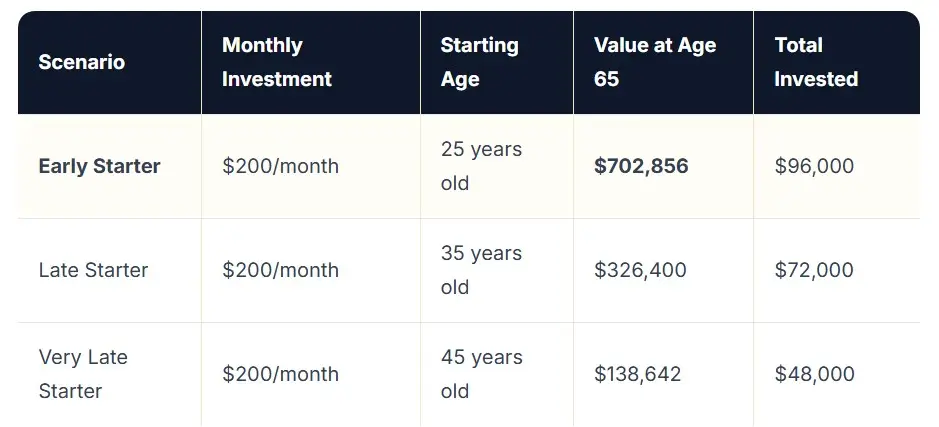
*Based on 8% average annual return, compounded monthly. For illustration purposes.
Prosperity Tip
Automate your savings on payday. Set up automatic transfers to a separatehigh-yield savings account the same day you get paid. What you don’t see, you won’t spend.
This one action alone can transform your financial trajectory.
What's Your Net Worth?
The Three Pillars of a Prosperous Financial Foundation
Before pursuing advanced wealth-building strategies, every person needs a solid financial foundation built on three pillars:
Pillar 1: Protection
Adequate insurance coverage, emergency fund, and estate planning to protect what you build
Pillar 2: Accumulation
Systematic savings habits, investment accounts, and retirement contributions to grow your wealth
Pillar 3: Optimization
Tax efficiency, asset allocation, and strategic debt management to maximize every dollar
02
02
Top 10 Proven Savings Strategies That Actually Work in 2025
Practical, actionable strategies backed by financial research and real-world results
Not all savings strategies are created equal. The following 10 strategies have been proven through decades of financial research and the real-world experiences of millions of successful wealth builders.
Not all savings strategies are created equal. The following 10 strategies have been proven through decades of financial research and the real-world experiences of millions of successful wealth builders.
Implement these in order for maximum impact.
Implement these in order for maximum impact.
01 Automate Your Savings
(The #1 Most Impactful Strategy)
Automation removes the human element of willpower from saving. Set up automatic transfers to your savings and investment accounts on payday.
Research from the Brookings Institution Shows that people who automate their savings save 40% more than those who save manually.
Action Step:
Set up an automatic transfer of at least 10% of your take-home pay to a high-yield savings account the same day you receive your paycheck.
02 Use High-Yield Savings Accounts (HYSA)
Typical bank savings accounts may pay just 0.01% interest. By contrast, many online high-yield savings accounts now offer around 4–5% APY, giving your cash a far better return while it sits safely in savings.
On a $10,000 balance, that can mean earning about $1 a year instead of $400–500.
Action Step:
Open a HYSA today and move your emergency fund and short-term
savings there immediately. Compare rates at Bankrate.com.
03 The 1% Challenge: Incremental Savings Increases
If saving 20% feels impossible, start with what you can and boost it by 1% every 1–3 months. Small steps feel easier and build momentum, so saving grows without the strain of a big, painful change all at once.
This follows Richard Thaler’s “Save More Tomorrow” idea.
Action Step:
Start saving 1% more than you currently do today. Set a calendar
reminder in 60 days to increase it by another 1%.
04 Use High-Yield Savings Accounts (HYSA)
Tax refunds, bonuses, raises, gifts, and inheritances are windfalls. The prosperity rule: save 100% of each one until your emergency fund is fully built. This gives surprise money a clear job instead of letting it disappear.
After that, split every windfall 50% to savings or investments and 50% for enjoyment.
Action Step:
Commit right now that your next tax refund (average: $3,000) goes directly to your emergency fund or investment account. This can be done automatically as well.
Wealth Calculator
Project your financial future with precision
| Year | Contributed | Growth | Balance |
|---|
This calculator provides estimates for educational purposes only. Results are based on constant rates and do not account for taxes, fees, or market volatility. Consult a qualified financial advisor before making investment decisions.
05 Zero-Based Budgeting: Give Every Dollar a Job That Works for You
Zero-based budgeting means your income minus all expenses, savings, and investments equals zero.
Every dollar is assigned a purpose before the month begins. This is critical to your success. YNAB (You Need A Budget) users reportsaving an average of $600 more per month in their first year of using this method.
Action Step:
Create a zero-based budget before next month begins.
Use YNAB, EveryDollar, or a simple spreadsheet. Make sure you are tracking everything in real time.
06 The Subscription Audit: Eliminate Silent Money Drains
The average American pays for 4+ streaming services and multiple forgotten subscriptions totaling $219/month ($2,628/year). A quarterly subscription audit can immediately free up $50–150/month that can be redirected to savings. Real Example: Canceling 3 unused subscriptions ($15 + $12 + $9/month = $36/month) invested at 8% over 30 years = $53,868 in additional wealth.
Action Step:
Review your bank and credit card statements today.
Cancel every subscription you haven’t used in the last 30 days or those that are recurring that are outdated.